How to play your way to better sleep for your child
Restlessness in young children is completely normal because their body and brain are constantly working overtime. Let's just say that the little citizens of the world go through a steep learning curve in the first years of their lives. In fact, it's not surprising that it can be difficult to settle down at bedtime.
The good news is that as a parent, you can help your little one find calm in their body, and even in a fun way: by stimulating the proprioceptive sense.
Karen Kildahl, sleep expert, child health advisor, and midwife, explains:
"The proprioceptive sense is actually a bit overlooked in connection with sleep. This sense plays a crucial role in our ability to understand and coordinate our movements, maintain balance, and feel safe in our bodies, providing a sense of well-being. It gives the brain feedback on the position, movements, and tension state of our muscles, joints, and tendons. One of the primary functions of the proprioceptive sense is to give us body awareness.
You might wonder what this has to do with sleep. Well, you see, good stimulation of this sense brings more calm to the nervous system."
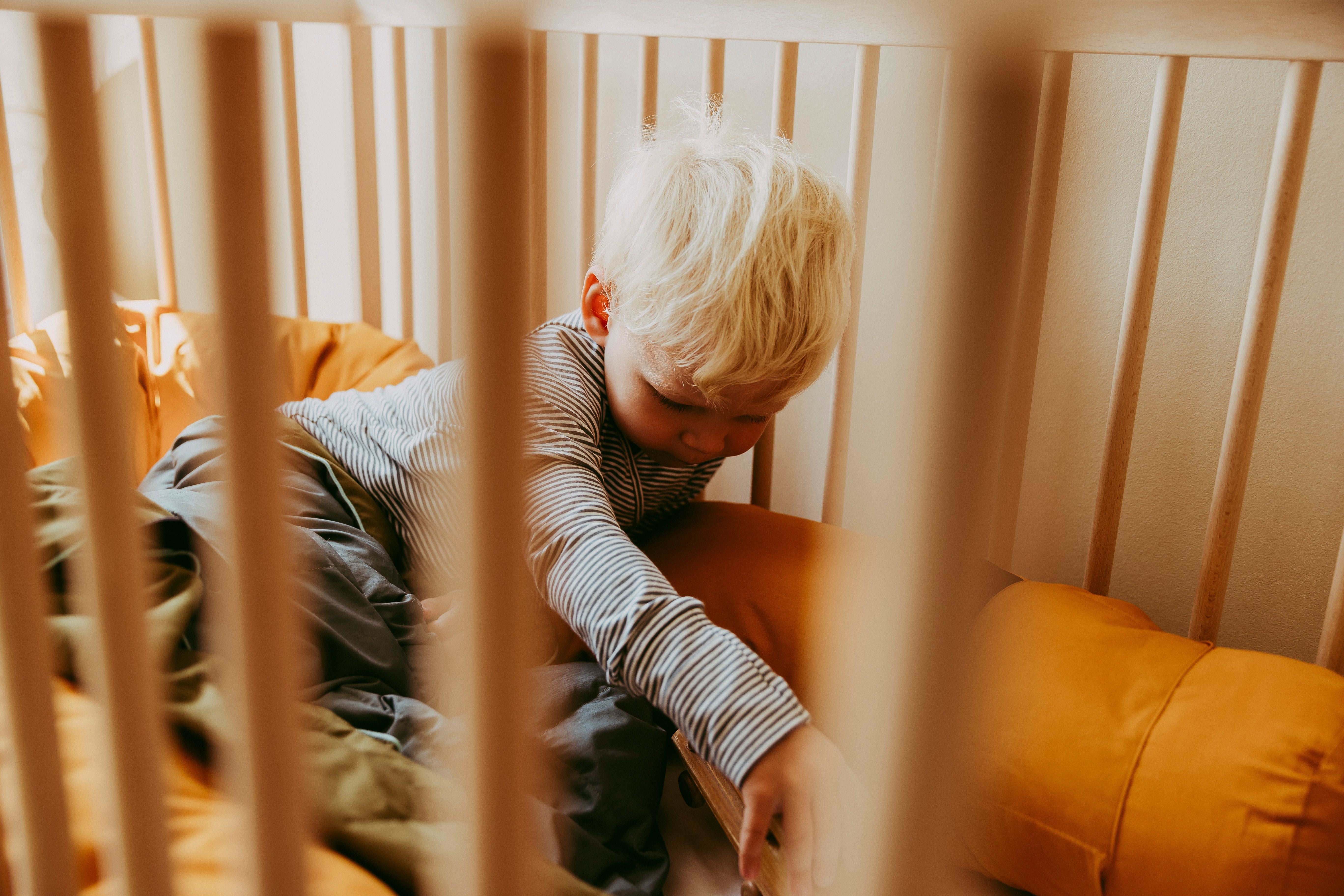
What is often referred to as motor restlessness at bedtime is actually just the small child's way of self-soothing. If there hasn't been "enough input" for proprioceptive stimulation, the child may have difficulty settling down at bedtime. The child might get up a lot, kick their legs into the mattress, seek out a corner of the bed, lie across it, or try to push their arms and legs through the bars.
Understand that this is not a child trying to make life difficult for their parents, but a child trying to define their body and calm their nervous system.
Exercises to "stock up" on proprioceptive stimulation
With these simple and fun exercises, you can help your child find calm more quickly at bedtime:
- Burrito. Roll the child into a blanket/duvet and let them get out by themselves.
- Bear hug. Give your child a long, firm hug.
- Play in a ball pit.
- Heavy lifting. Let the child carry the laundry basket or the toy box.
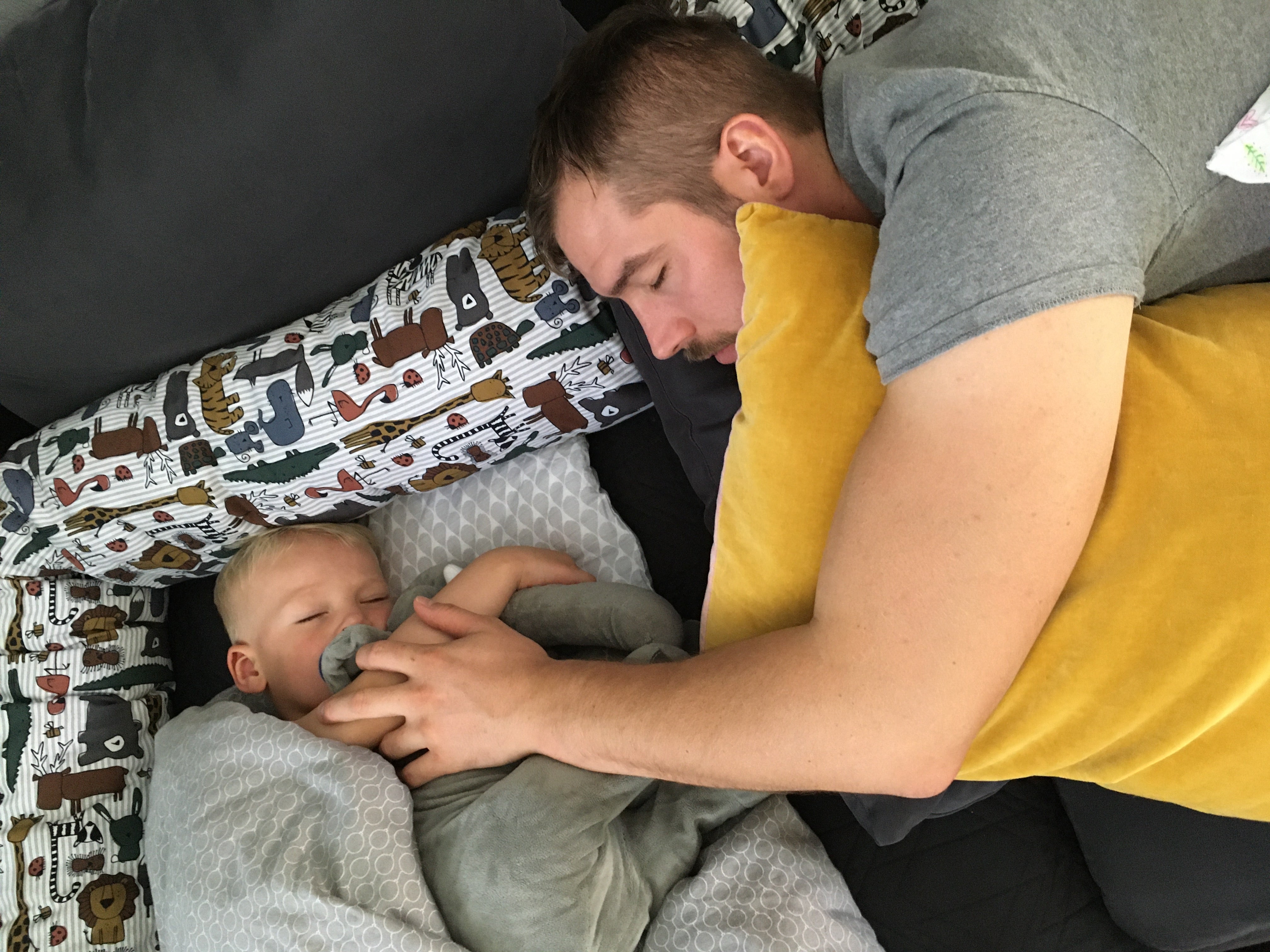
- Burger. "Squeeze" the child between two large sofa cushions.
- Cover the child with a pile of sofa cushions and let her get out by herself.
- Baking bread. Pretend the child is dough that needs to be kneaded and give firm squeezes all over the body.
- Sensory play for the feet. Walk barefoot on different surfaces. A LEGO baseplate, a tray of rice or dried pasta, pegboards, or just a barefoot walk outside are brilliant for the senses.
- Rolling pin with a weighted blanket. Roll the child into their weighted blanket and then roll the child back and forth like a rolling pin. On bare skin, the exercise is even more effective. The granules, which move freely in the blanket, effectively stimulate nerve endings and send feedback back to the brain.
Adapt the exercises to your child's age and always remember that the exercises should be done on the child's terms. Above all, it should be fun.